
Nestled deep within the Aurlandfjord — a branch of the mighty Sognefjord — the village of Flåm is home to just 350 year-round residents yet draws hundreds of thousands of visitors each year. The reason is simple: the Flåmsbana, a 20-kilometre railway that climbs from sea level to 867 metres through some of the most dramatic scenery on Earth. For photographers and landscape lovers alike, this stretch of track is nothing short of paradise.
The Flåmsbana: Engineering Marvel Meets Natural Wonder
Construction of the Flåm Railway began in 1923 and took nearly 20 years to complete. Workers carved tunnels through solid mountain rock by hand, often in punishing weather conditions. The result is a masterpiece of engineering: a line that ascends 867 metres at an average gradient of one in eighteen, featuring 20 tunnels (18 of which were hand-excavated) and a spectacular figure-eight spiral at the Vatnahalsen section.
But what makes the Flåmsbana truly extraordinary isn't the engineering — it's the scenery. The train passes through the Flåm Valley, alongside the rushing Flåm River, past thundering waterfalls, through snow-capped mountains, and beside deep gorges. The Myrdal mountain station at the top connects to the Bergen Line, making it possible to continue your journey across the roof of Norway. If you're planning a wider adventure, the entire Sognefjord region offers incredible subjects for Norwegian fjord prints that capture this raw beauty.
Key Photography Stops Along the Route
While you'll want to shoot from the train window throughout the journey, two scheduled stops deserve special attention:
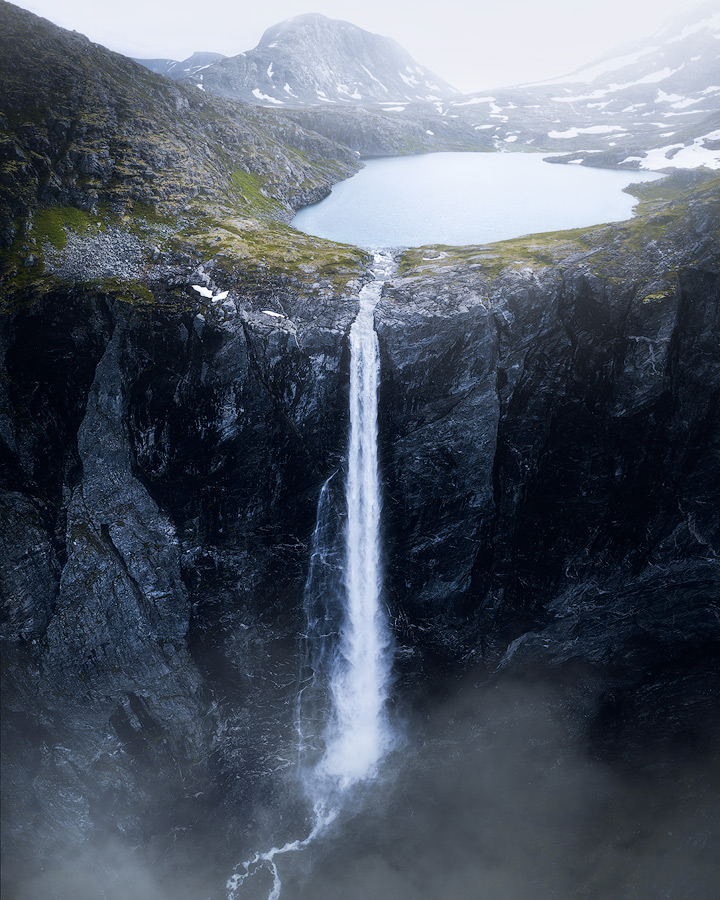
Kjosfossen Waterfall: About halfway up the line, the train pauses for five minutes at the thundering Kjosfossen waterfall. During summer, a woman in a traditional Huldra dress dances among the spray — a nod to Norwegian folklore. The waterfall drops 93 metres in a single cascade, and the mist creates natural rainbows on sunny days. Use a fast shutter speed to freeze the water or a slow one (if you can stabilise your camera) for a silky effect.
Myrdal Station: At the summit, you'll have a few minutes to step out and photograph the mountain plateau. The views here stretch across snowfields and craggy peaks — a stark contrast to the green valley below. In winter, the landscape transforms into a monochrome wonderland of white and grey.
Flåm Village: More Than Just a Starting Point
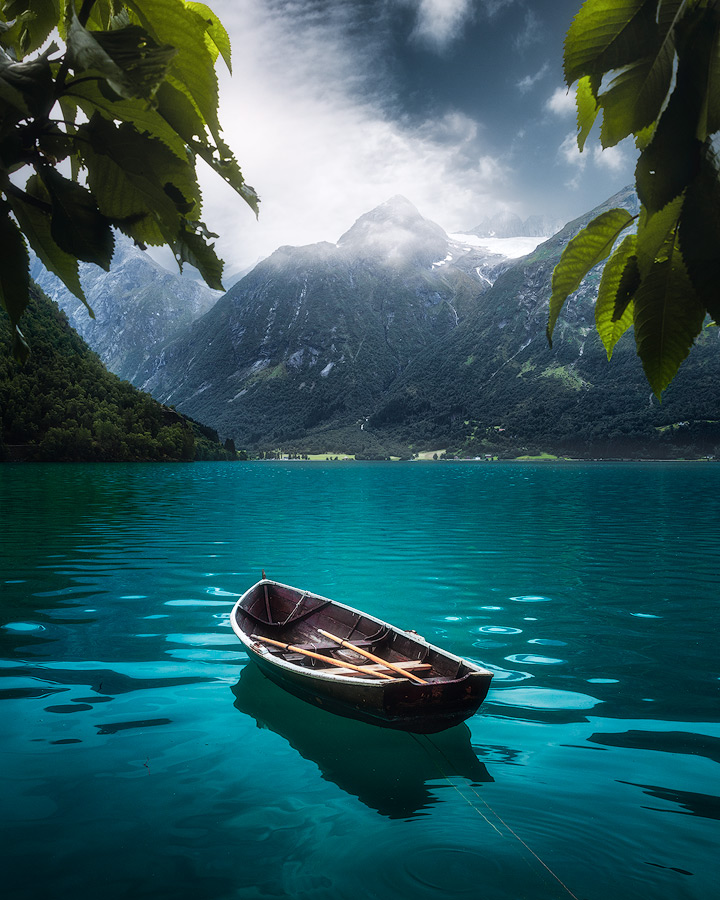
Most visitors rush through Flåm on their way to or from the train, but the village itself rewards a slower pace. The Flåm Church, dating back to 1670, sits quietly by the fjord and makes for a charming foreground against the towering mountains. The harbour area, with its traditional wooden buildings and fishing boats, offers classic Norwegian coastal scenes.
A short walk along the fjord reveals hidden vantage points where the Aurlandfjord mirrors the steep cliffs above. In the golden hours — which stretch long into the evening during Norwegian summers — the water glows with reflected light. These are the moments that translate beautifully into canvas prints, where the texture of the canvas adds depth to the already rich landscape tones.
Best Times to Photograph the Flåm Valley
Spring (May–June): The snowmelt swells the waterfalls to their most dramatic levels, and wildflowers begin to dot the valley floor. The light is soft and diffused, ideal for capturing the full tonal range of the landscape.
Summer (July–August): Long daylight hours give you almost unlimited shooting time. The midnight sun means you can photograph at 11pm with full golden light. However, this is also peak tourist season, so expect crowds — especially at Kjosfossen.
Autumn (September–October): The valley turns gold and crimson as birch and rowan trees change colour. The water levels are lower but the colour palette is stunning. This is arguably the best time for fine art landscape photography in the region.
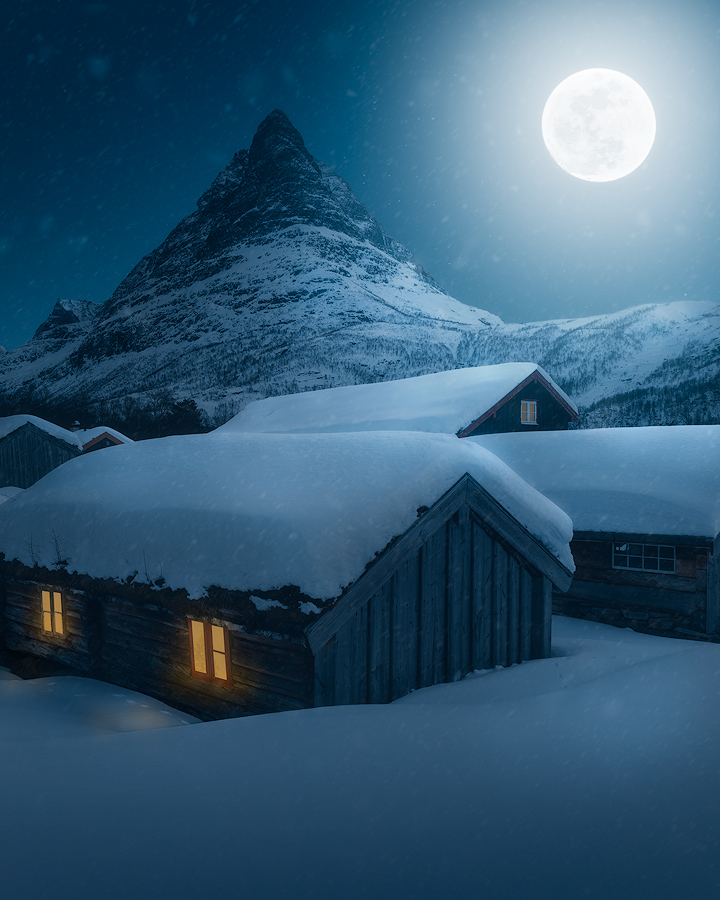
Winter (November–March): The Flåmsbana runs year-round, and winter transforms the valley into a silent, snow-draped world. The contrast between the dark fjord water and the white mountains is striking. For those who love dramatic, moody imagery, winter Flåm is a dream — and these scenes look exceptional as aluminum prints, where the metallic surface enhances the cool tones and sharp details.
Beyond the Train: Exploring the Aurlandfjord
Photography in Flåm doesn't end with the railway. Electric fjord cruises depart regularly from the harbour, taking you deep into the Aurlandfjord and the neighbouring Nærøyfjord — a UNESCO World Heritage Site and one of the narrowest fjords in Europe. From the water, you'll see sheer cliffs rising 1,800 metres on either side, with abandoned mountain farms clinging impossibly to the rock faces.
The nearby Stegastein viewpoint, perched 650 metres above the fjord on a wooden platform that extends 30 metres over the edge, offers one of the most breathtaking panoramic views in Norway. The drive up the 18-switchback Aurlandsvegen road is an adventure in itself, and each hairpin bend reveals a new composition.
For photographers who want to capture the broader scope of Norway's western coast — from fjords to fishing villages — the region around Flåm connects easily to other iconic destinations. A short ferry ride takes you toward the west, where you'll find scenes that rival the famous Lofoten wall art in their dramatic beauty.
Bringing Flåm Home: From Photograph to Wall Art
There's something deeply satisfying about transforming a travel photograph into a finished piece of wall art. The Flåm Valley, with its interplay of water, rock, and light, lends itself beautifully to large-format prints. Whether you favour the classic warmth of canvas or the modern crispness of metal, the key is choosing a print medium that matches the mood of your image.
Soft, misty fjord mornings translate well to canvas, where the fabric texture adds a painterly quality. Sharp, high-contrast mountain scenes — especially winter shots with snow against dark rock — shine on aluminum, where the surface enhances clarity and colour depth. And if you're building a gallery wall, mixing both mediums creates visual interest. Browse the full collection of Norway landscape prints to see how different scenes look in each format.
Don't forget about the night sky, either. The Aurlandfjord region, far from city lights, is an excellent spot for astrophotography. On clear winter nights, you might even capture the aurora dancing above the fjord — a scene that makes for unforgettable Northern Lights prints.
Conclusion: Flåm Deserves More Than a Day Trip
Too many travellers treat Flåm as a quick stop on a longer Norway itinerary — ride the train, grab a coffee, and move on. But if you're a photographer, or simply someone who appreciates dramatic landscapes, Flåm rewards time. The light changes hour by hour. The weather shifts from mist to sunshine in minutes. And the sheer variety of compositions — waterfalls, fjords, mountains, villages, and aurora — means you'll never run out of subjects.
So next time you're planning a trip to Norway, give Flåm at least two days. Ride the Flåmsbana, cruise the fjord, hike to a viewpoint, and wait for the light to do its magic. Then bring that magic home as a fine art print — because some landscapes deserve more than a phone screen. They deserve a place on your wall.
Ready to bring Norway home? Explore our full collection of Norway landscape prints, with free shipping across Europe.
