
The Northern Lights — or aurora borealis — rank among the most spectacular natural phenomena on Earth. Norway is one of the best places in the world to witness this magical light show, and thousands of visitors travel here every winter in hopes of seeing the sky come alive with colour. This guide covers everything you need to know to maximise your chances of seeing the aurora in Norway.
When Is the Best Time to See the Northern Lights in Norway?
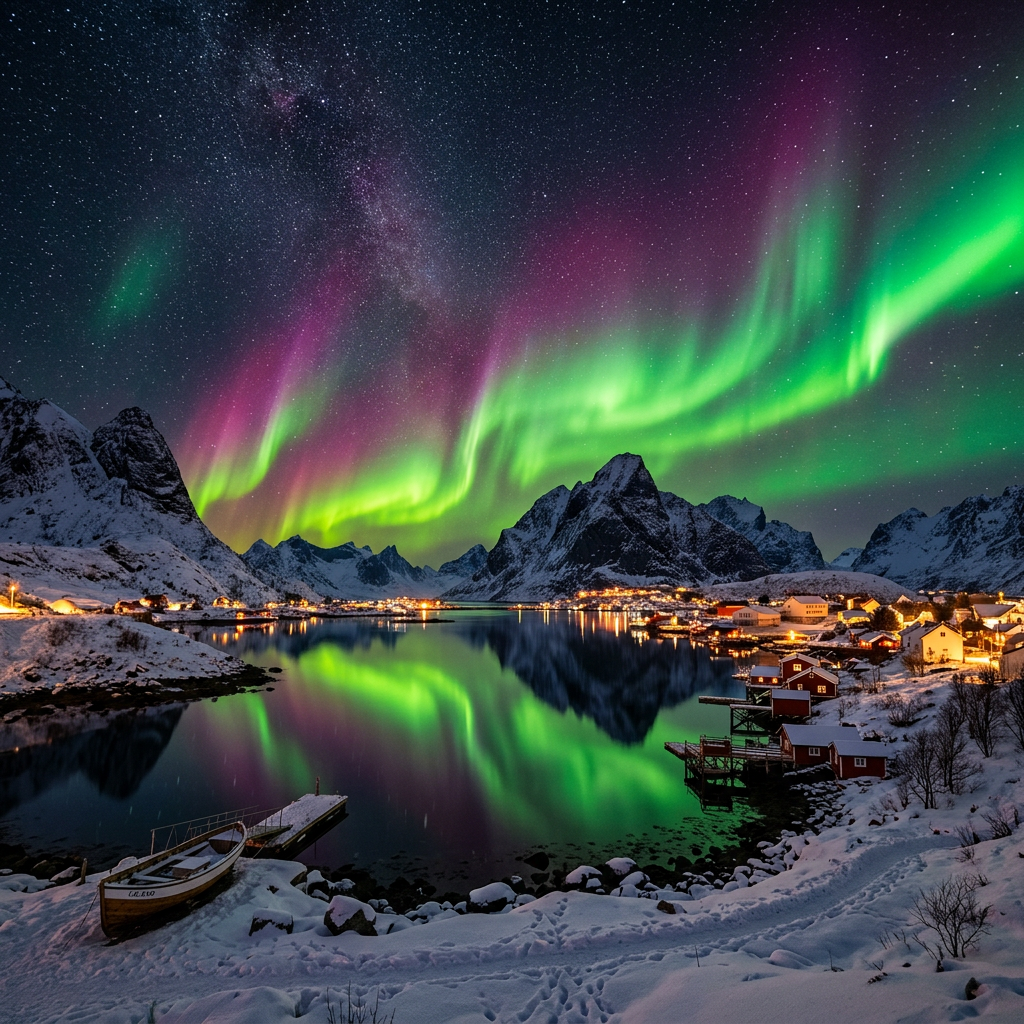
The Northern Lights are visible in Norway from late September to late March, when the nights are long and dark enough. The peak season is November through February. You need darkness, clear skies, and sufficient solar activity — the three ingredients that rarely all align perfectly, which is what makes a Northern Lights sighting feel so special.
The equinoxes (around 21 September and 21 March) often bring increased geomagnetic activity, making them statistically good times to chase the aurora. Many experienced aurora hunters consider late October and early November a sweet spot — the nights are long but the weather isn't at its harshest yet.
Where to See the Northern Lights in Norway
You need to be within or near the "auroral oval" — a ring around the magnetic North Pole where aurora activity is concentrated. In Norway, the best regions are:
- Tromsø — The most popular Northern Lights destination in Norway, with excellent infrastructure, tours, and easy access. Located at 69.6°N, it sits right in the auroral zone.
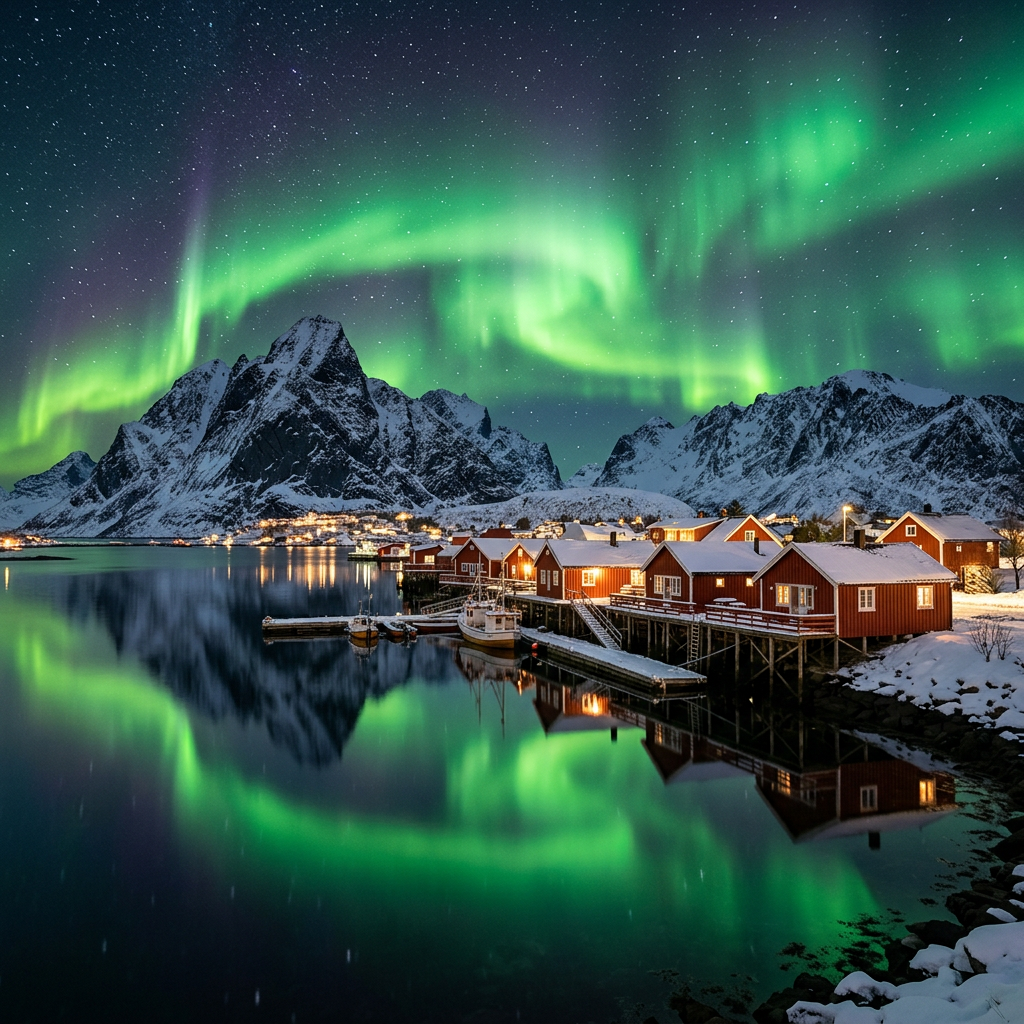
- Lofoten Islands — The combination of Northern Lights, dramatic mountain scenery, and traditional fishing villages makes Lofoten arguably the most photogenic aurora destination in the world. Our Lofoten wall art collection captures this magic.
- Svalbard — For polar night (November–January), Svalbard offers 24-hour darkness, giving the aurora maximum opportunity to appear at any hour.
- Alta — Known as the "City of the Northern Lights," Alta has the highest frequency of aurora sightings in Norway and is home to the Northern Lights Cathedral.
- Senja Island — Less visited than Lofoten but equally dramatic, Senja is a rising star for aurora photography.
How to Predict the Northern Lights
Aurora forecasting has become increasingly accurate. Here are the best tools:
- Space Weather Prediction Center (NOAA) — Provides 3-day forecasts of geomagnetic activity (Kp index). A Kp of 3 or above is usually sufficient to see aurora in northern Norway.
- Norwegian Meteorological Institute (Yr.no) — Essential for checking cloud cover, which is the biggest enemy of aurora viewing.
- Aurora apps — Apps like "My Aurora Forecast" and "Aurora Now" give real-time alerts when conditions are favourable.
The key is patience. Book at least 4–5 nights to give yourself multiple chances. Many visitors who book only 2 nights leave disappointed due to cloudy weather.
Best Conditions for Seeing the Northern Lights
- Dark skies — get away from city lights
- Clear skies — no cloud cover
- High geomagnetic activity (Kp index 3+)
- New moon phase — less light pollution from the moon
- Peak hours between 10pm and 2am
How to Photograph the Northern Lights
Capturing the aurora requires a bit of preparation, but the results are worth it. The images you take can make truly stunning canvas prints that preserve the memory of this extraordinary experience.
- Use a tripod — Essential for long exposure shots. Even a basic travel tripod will do.
- Wide-angle lens — A wide lens (14–24mm) captures more of the sky.
- Manual settings — Start with ISO 800–3200, aperture f/2.8, shutter speed 5–15 seconds and adjust from there.
- Include foreground — The aurora is most dramatic when reflected in water or framed by mountains. This is why Lofoten wall art featuring Northern Lights is so popular — the landscapes add incredible depth.
- RAW format — Shoot in RAW for maximum editing flexibility.
Northern Lights Tours in Norway
If you don't want to rent a car and chase the lights yourself, organised Northern Lights tours are widely available from Tromsø and other Arctic towns. Tours often include a guide who monitors weather and takes you to the best viewing spots, sometimes by boat or snowmobile.
What to Wear for Northern Lights Hunting
Standing still in the Arctic cold for hours requires proper clothing. Dress in merino wool base layers, insulating mid-layers, and a windproof and waterproof outer shell. Insulated boots, thick gloves, and a hat that covers your ears are non-negotiable. Temperatures in northern Norway can drop to -15°C or below in winter.
Bring the Northern Lights Home
Not everyone can travel to the Arctic, but everyone can experience the magic of the Northern Lights through photography. At Nidaros Photo, our images of the aurora borealis over Norwegian fjords and mountains are captured by a local photographer who knows exactly when and where to be.
Printed on premium materials with free shipping across Europe, our Norway landscape prints bring the breathtaking beauty of the Arctic night sky to your home. Browse our canvas prints and Norwegian nature photography collection today.
