
Introduction to Jotunheimen
Norway's Jotunheimen National Park is a landscape of superlatives. The name translates to "Home of the Giants," and once you stand beneath the towering peaks of Galdhøpiggen and Glittertind — Norway's two highest mountains — you understand why. Spanning over 1,150 square kilometres of jagged summits, blue-tinged glaciers, and emerald valleys, Jotunheimen is the crown jewel of Scandinavian mountain hiking and a dream destination for landscape photographers.
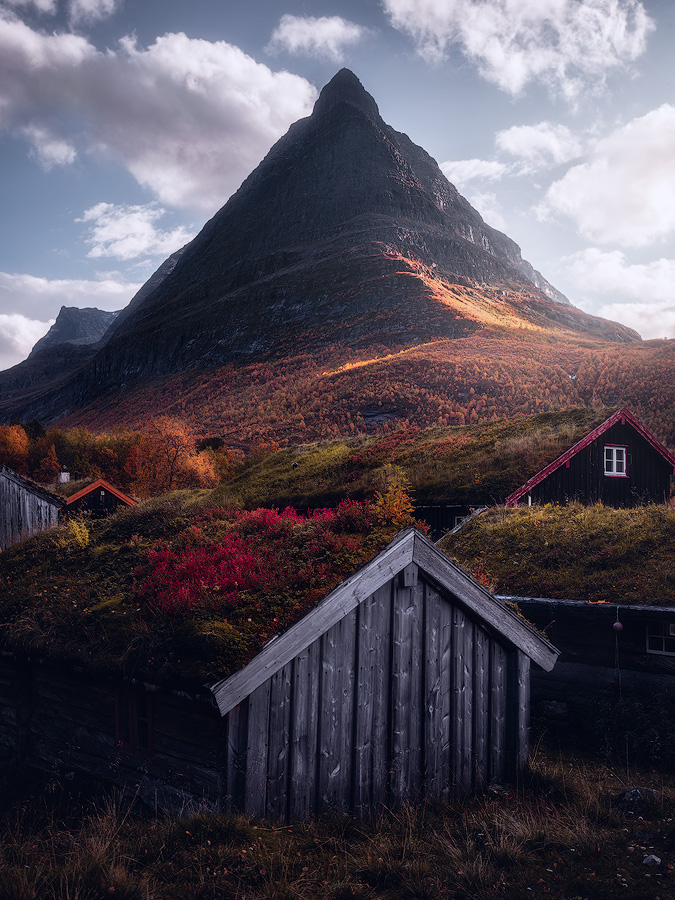
Whether you're planning a multi-day trek across the Besseggen ridge, a summer ski trip on Galdhøpiggen, or simply want to bring the raw beauty of Norway's high mountains into your living room through canvas prints, this guide covers everything you need to know about exploring Jotunheimen.
The Highest Peaks in Northern Europe
Jotunheimen holds 29 of Norway's 30 tallest peaks, making it the undisputed alpine capital of the country. Galdhøpiggen rises to 2,469 metres above sea level, while Glittertind follows closely at 2,464 metres. What makes these summits special isn't just their height — it's the accessibility. In summer, you can reach the top of Galdhøpiggen on a guided glacier walk that requires no technical climbing experience, just sturdy boots and a sense of adventure.
The journey to Galdhøpiggen begins at Juvasshytta, a mountain lodge at 1,841 metres. From there, a guided tour crosses the Styggebreen glacier before the final ascent to the summit cairn. On a clear day, you can see a staggering one-sixth of Norway from the top. It's a view that stays with you — and one that looks stunning when captured as aluminum prints, where the sharp metallic surface mirrors the crisp, high-altitude light.
Iconic Hiking Routes
Beyond the summits, Jotunheimen offers some of Norway's most legendary trails. The Besseggen Ridge hike, starting from Gjendesheim, is the most famous — a dramatic 14-kilometre ridge walk with steep drops on both sides and views over the emerald Gjende lake on one side and the deep blue Bessvatnet on the other. The colour contrast between the two lakes is one of the most photographed scenes in all of Norway.
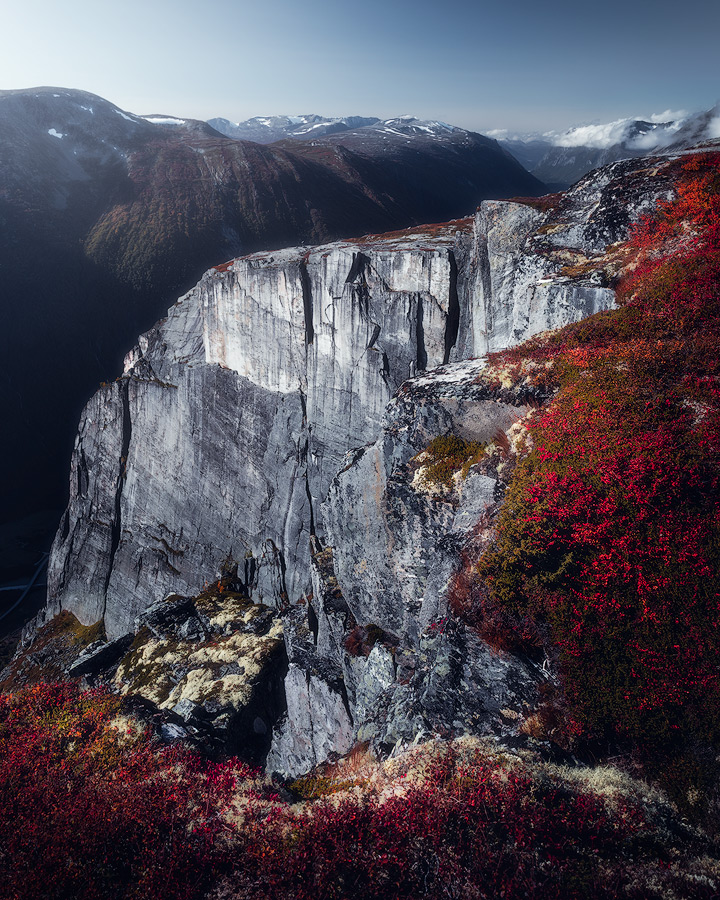
Other notable routes include the traverse from Spiterstulen to Skogadalsbøen, the Leirhøi summit trail, and the easier but equally beautiful walk to Vestre Mæla — a stone's throw from the Turtagrø hotel. If you've already conquered Trolltunga or explored the Norwegian fjord prints region, Jotunheimen's high mountain trails offer a completely different — and arguably more rewarding — challenge.
Glaciers and Lakes
Jotunheimen is home to the largest glacier on mainland Norway, Smørstabbreen, along with dozens of smaller ice fields that feed crystalline lakes below. The park contains over 300 lakes, including Gjende, Bessvatnet, Bygdin, and Leirvatnet — each with its own distinct character and colour palette. Gjende's striking emerald green comes from glacial flour, fine rock particles suspended in the meltwater, while Bessvatnet's deep blue reflects the sky with startling clarity.
For photographers, the interplay of light, ice, and water creates endless compositions. Early morning mist on Gjende, golden hour on the summits, and midnight sun reflections on calm lakes — Jotunheimen rewards those who wait. Many of these scenes translate beautifully into Northern Lights prints territory, where the same dramatic landscapes take on an entirely different mood under the aurora.
When to Visit and Practical Tips
The best time to visit Jotunheimen for hiking is from late June to early September, when the snow has melted from the high trails and the mountain lodges (hytter) are fully operational. The Norwegian Mountain Touring Association (DNT) maintains a network of staffed and self-service cabins throughout the park, making multi-day treks logistically simple. Book cabins well in advance for July and August, as they fill quickly.
Weather in the high mountains changes fast. Always carry warm layers, a rain jacket, a map and compass (not just GPS), and enough food for your route. River crossings are common on longer trails — bring trekking poles and waterproof boots. If you're planning a winter ski touring trip, go with a guide and check avalanche conditions at varsom.no.
Capturing Jotunheimen: Photography Tips
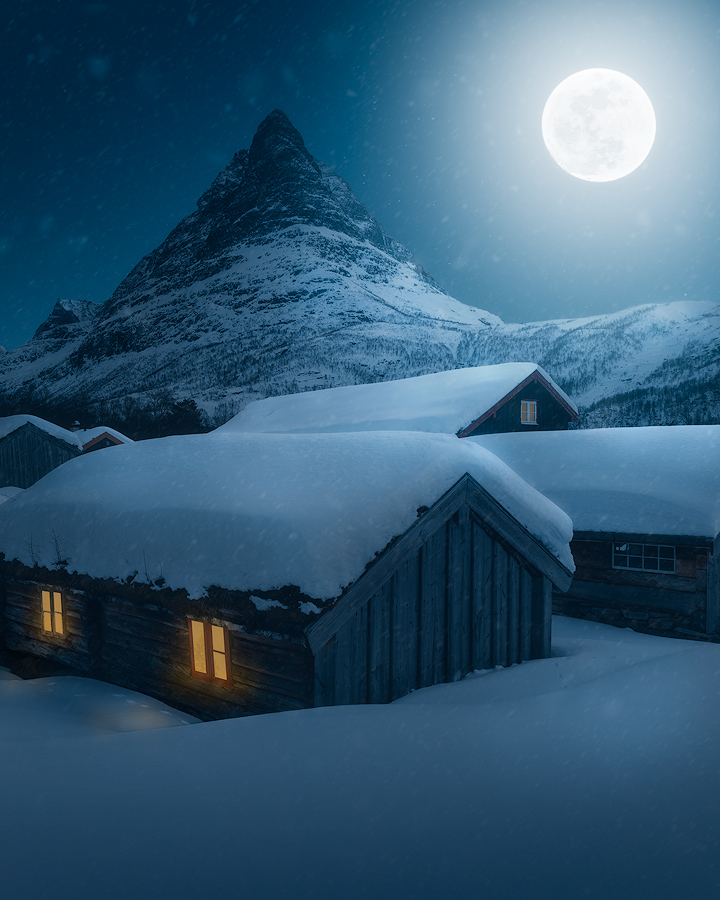
Jotunheimen is a paradise for landscape photography. The key to great shots is timing and patience. The midnight sun period (June–July) gives you golden light at almost any hour, while September brings autumn colours — rust-red birch, golden grass, and the first dustings of snow on the peaks. A wide-angle lens (16–35mm) is essential for the expansive ridge views, but don't neglect a telephoto for compressing layered mountain ridges into abstract patterns.
If you can't make the trip yourself — or want to relive the experience every day — explore our collection of Lofoten wall art and the full Norway landscape prints gallery, where Jotunheimen's peaks and glaciers feature alongside Norway's other iconic landscapes. Available as canvas, aluminum, acrylic, and fine art prints, each piece is produced to gallery quality and shipped worldwide.
Conclusion
Jotunheimen National Park is more than a hiking destination — it's an encounter with the raw, unfiltered power of Norwegian nature. From the summit of Galdhøpiggen to the emerald waters of Gjende, every corner of the park tells a story of ice, stone, and time. Whether you're planning your first visit or your tenth, the Realm of Giants never fails to inspire.
Ready to bring Jotunheimen into your home? Browse our full collection of Norway landscape prints and find the perfect piece for your wall. Free shipping worldwide, gallery-quality production, and a 30-day satisfaction guarantee.
