
The Lofoten Islands are unlike anywhere else on Earth. This remote archipelago above the Arctic Circle in northern Norway has become one of the world's premier travel and photography destinations — and for good reason. Towering peaks rise straight from the sea, traditional red fishing villages cling to rocky shores, and the light — whether midnight sun in summer or Northern Lights in winter — is extraordinary at every hour. This is your ultimate guide to visiting and photographing Lofoten.

Why Lofoten Is a Photographer's Dream
Lofoten sits at 68°N, well inside the Arctic Circle. In summer, the midnight sun bathes the islands in warm golden light for weeks on end — giving photographers endless hours of perfect shooting conditions. In winter, the polar night and frequent Northern Lights create otherworldly scenes that make truly spectacular Lofoten wall art. In between, the dramatic skies, ocean mist, and ever-changing weather create constantly shifting conditions that reward patient photographers.
Best Spots to Photograph in Lofoten
Reine
Reine is the most photographed village in Lofoten — and one of the most photographed places in all of Norway. The view from Reinebringen mountain (accessible by a steep but rewarding hike) gives you the classic aerial perspective over the village, surrounding mountains, and fjord below. This is the image you've seen on countless Norway landscape prints.
Hamnøy
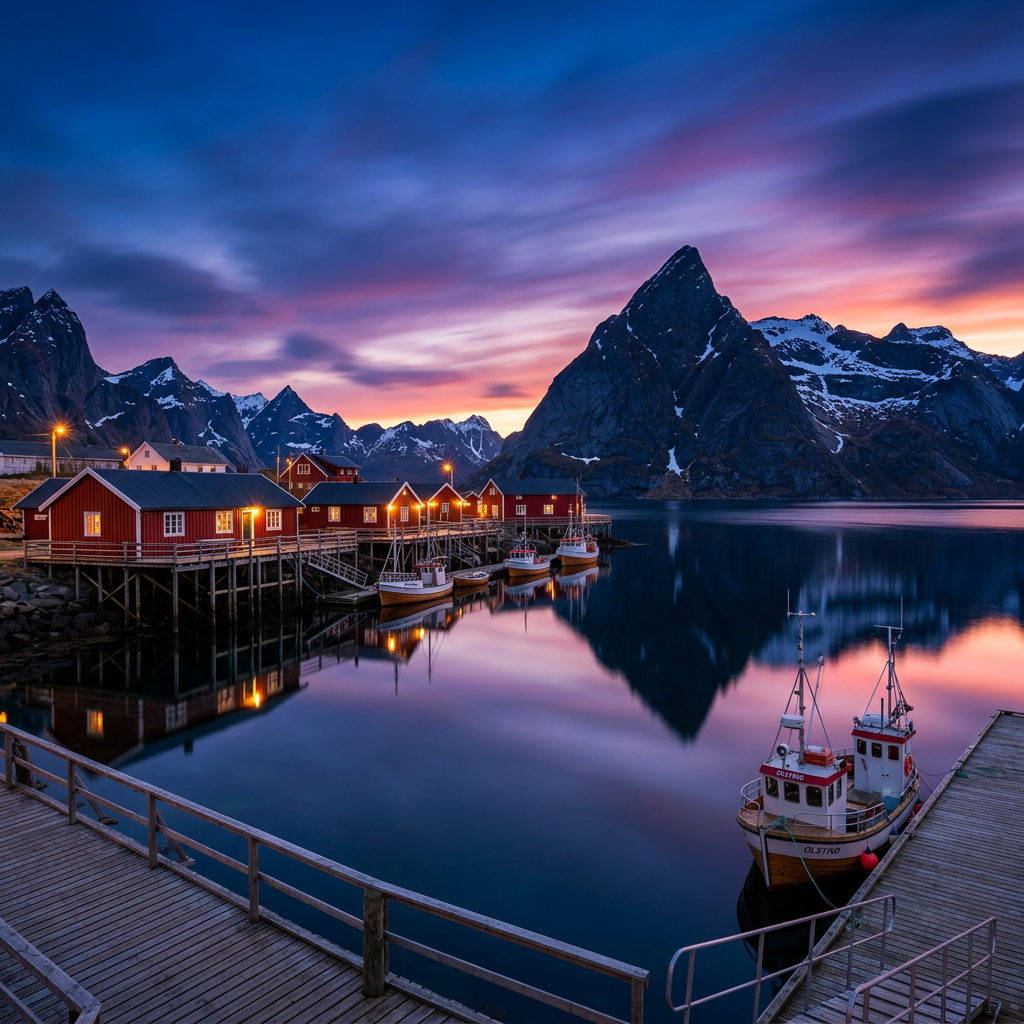
Just east of Reine, the small village of Hamnøy offers the iconic red rorbu cabins with the dramatic Festhaeltinden mountain as a backdrop. The wooden bridge connecting the islands is a favourite foreground element. At blue hour or during Northern Lights, this scene is absolutely unforgettable.
Nusfjord
One of the best-preserved fishing villages in Norway, Nusfjord feels like stepping back in time. The tiny harbour surrounded by yellow and red rorbuer and towering rock walls is intimate and atmospheric. Visit early morning before other tourists arrive.
Uttakleiv Beach
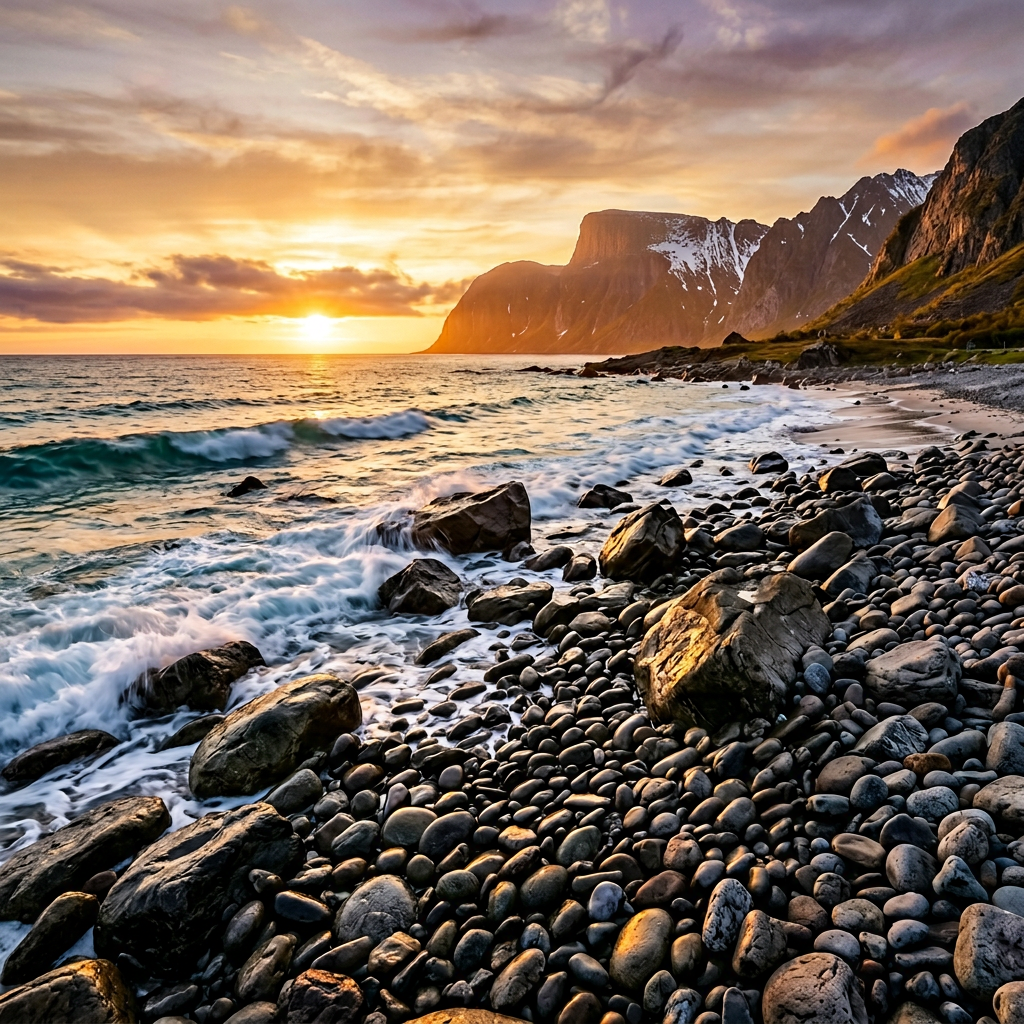
Lofoten's beaches are surprisingly beautiful — white sand and turquoise water that looks more Caribbean than Arctic. Uttakleiv is perhaps the most dramatic, with large smooth boulders and a backdrop of jagged peaks. At midnight sun, the light here is pure magic and makes stunning canvas prints.
Svolværgeita (The Goat)
The twin peaks above Svolvær are a landmark visible from all over the northern part of the archipelago. Advanced climbers can summit for extraordinary views, but the peaks photograph beautifully from below as well — particularly with Northern Lights in the background.
Flakstadøya & Myrland
The western islands of Lofoten are less visited but offer some of the most dramatic scenery. The small beach at Myrland, with its mountains plunging directly into the sea, is one of the most spectacular locations for Norwegian nature photography.
When to Visit Lofoten
Summer (June–August)
Midnight sun from late May to mid-July means you can photograph at any hour. The landscape is green, wildflowers bloom, and the weather is at its most stable. This is peak tourist season — book accommodation well in advance.
Winter (November–February)
The best time for Northern Lights, dramatic skies, and snow-covered peaks. The rorbuer reflected in icy water under a curtain of green aurora is arguably the most iconic Lofoten image. Pack serious winter gear.
Shoulder Seasons (March–May, September–October)
The sweet spot for many photographers — fewer crowds, dramatic weather, and in autumn, stunning warm colours on the hillsides. March also offers both good aurora chances and increasingly long days.
Getting to Lofoten
- By plane — Fly to Svolvær (SVJ) or Leknes (LKN) via Oslo or Bodø. Small propeller planes, but the aerial approach over the islands is spectacular in itself.
- By ferry — The Bodø–Moskenes ferry (3.5 hours) is a classic way to arrive, with dramatic views of the islands from the sea.
- By car — Drive via the E10 from Narvik through Bjørnfjell and down into the islands. One of Norway's most scenic drives.
Getting Around Lofoten
A rental car is strongly recommended. The E10 runs the length of the archipelago, connecting all the main villages. Distances look small on the map but road conditions and ferry crossings can add time. Having your own vehicle gives you the flexibility to chase light and weather — essential for photography.
Where to Stay in Lofoten
Staying in a traditional rorbu (fishing cabin) is the quintessential Lofoten experience. Many have been converted into comfortable holiday accommodation while retaining their historic character. Book months in advance for summer visits. Alternatives include hotels in Svolvær and Leknes, and an increasing number of glamping options.
Lofoten Photography Tips
- Shoot in RAW format to handle the extreme dynamic range of bright sky and dark water
- Use a polarising filter to reduce reflections and saturate the turquoise water
- Golden hour in summer can last several hours — take your time
- In winter, check aurora forecasts nightly and be ready to move fast when conditions align
- Drone photography is stunning here — check local regulations and no-fly zones first
Bring Lofoten Home
Whether you've visited Lofoten and want to relive the experience, or you're dreaming of making the trip, our Lofoten wall art collection brings the raw beauty of this extraordinary archipelago into your home.
Every image in our collection is captured by a Norwegian photographer who knows these islands intimately. Available as premium canvas prints, aluminium, acrylic, and more — with free shipping across Europe. Browse our full range of Norway landscape prints and find your perfect piece of Lofoten.
