
Norway is home to some of the world's most dramatic waterfalls — fed by glaciers, framed by steep mountains, and cascading into deep fjord valleys. For photographers, they offer an irresistible blend of motion, scale, and raw natural power. Whether you're planning a shoot or looking for the perfect piece of wall art to bring that energy into your home, this guide covers the best Norwegian waterfalls and how to capture them.
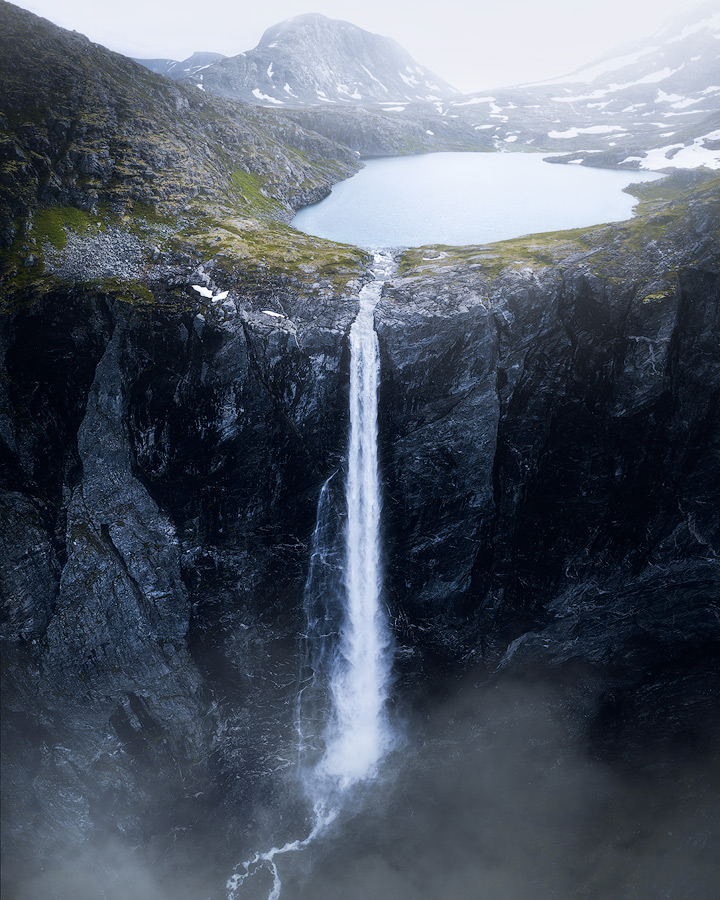
Why Norway Has the Best Waterfalls
Norway's geography is perfectly suited for spectacular waterfalls. The country's combination of high plateaus, steep fjord walls, and heavy rainfall creates ideal conditions. Add to that the meltwater from glaciers that feeds hundreds of rivers through the summer, and you get waterfalls that are both numerous and powerful. Many of the finest falls are visible right from the road, making them accessible even if you're not a hardcore hiker.
What sets Norwegian waterfalls apart is their setting. A waterfall in a flat landscape is impressive, but a waterfall plunging 600 meters down a cliff face into a fjord is something else entirely. If you love these dramatic landscapes, browse our collection of Norwegian fjord prints for inspiration on your next adventure.
Top 5 Waterfalls to Photograph in Norway
1. Vøringsfossen
Located in Eidfjord, Hardanger, Vøringsfossen drops 182 meters in a single free-fall and 145 meters in a series of cascades. The viewing bridges offer dizzying perspectives down into the Måbødalen valley. Visit in early summer when the meltwater is at its peak — the roar is unforgettable.
2. Langfoss
Often listed among the world's most beautiful waterfalls, Langfoss in Åkrafjorden tumbles 612 meters down a sheer cliff face. The spray creates rainbows on sunny days, and the falls are visible from the main road. It's one of those rare spots where you can shoot an incredible composition without leaving your car — though a short hike up the side gives you better angles.
3. Kjosfossen
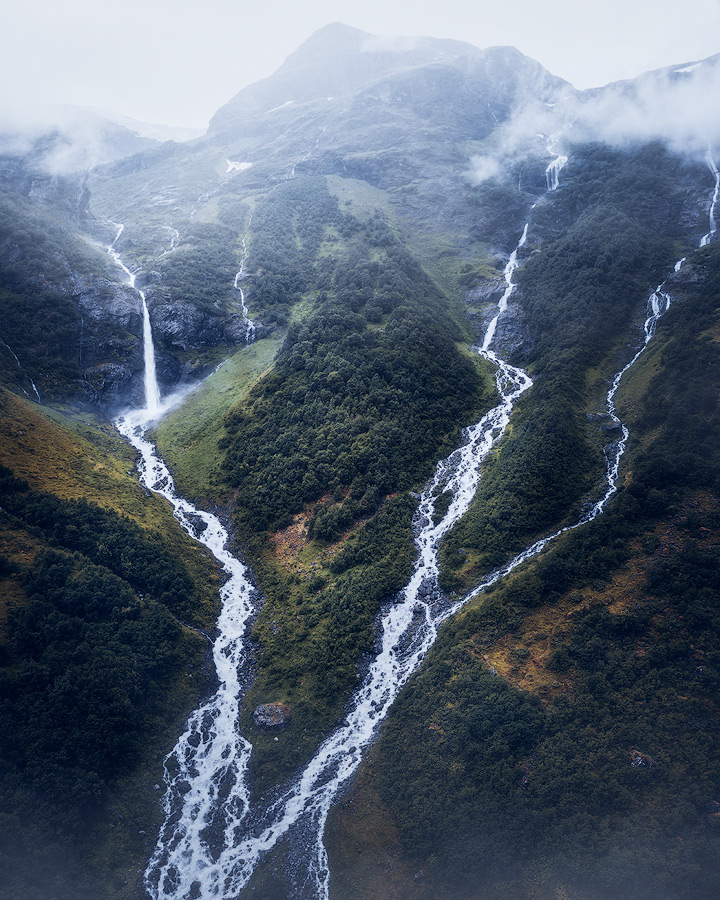
One of the most photographed waterfalls in Norway, Kjosfossen is visible from the Flåm Railway — one of the world's most scenic train journeys. The falls drop 225 meters right beside the tracks, and the train even stops for a few minutes so passengers can take photos. The combination of the waterfall, the steep gorge, and the misty mountain light makes it a photographer's dream.
4. Mardalsfossen
Near Eresfjord in Møre og Romsdal, Mardalsfossen is one of Norway's tallest waterfalls with a total drop of 705 meters. It's only released during the summer tourist season (June–August), so timing is crucial. The hike to the base is moderate and rewards you with an up-close view of the sheer power of the cascade.
5. Seven Sisters (De Syv Søstre)
On the northern side of the Geirangerfjord, the Seven Sisters is arguably the most iconic waterfall in Norway. Seven separate streams plunge side by side down a 250-meter cliff. The best views are from the fjord itself — take a cruise or kayak to get the classic composition. If you've already visited Geirangerfjord, this area pairs beautifully with our Lofoten wall art for a comprehensive Norwegian landscape collection.
Photography Tips for Waterfall Shots
Capturing waterfalls well requires more than just showing up. Here are the key techniques to get professional-quality images:
- Use a tripod: Long exposures are essential for that silky-smooth water effect. Even a small tripod is better than hand-holding.
- Slow down your shutter: Aim for 1–4 seconds. Use a neutral density filter if it's bright out — this lets you slow the shutter without overexposing.
- Shoot in overcast light: Harsh sunlight creates blown highlights on white water and dark shadows. Cloudy days give you even, soft light that's perfect for long exposures.
- Find a foreground: A waterfall alone is nice, but including rocks, moss, or a stream in the foreground adds depth and scale.
- Try different angles: Don't just shoot from the most popular viewpoint. Hike around, get lower, get higher — the best composition is often off the beaten path.
These techniques work for all Norwegian landscapes. If you're planning a broader trip, check out our full range of Norway landscape prints to scout locations and get inspired.
Best Print Mediums for Waterfall Photography
Once you've captured your shots — or if you're shopping for ready-made waterfall prints — the medium you choose dramatically affects the final look. Water and motion images benefit enormously from the right print format.
Aluminum prints are exceptional for waterfall photography. The metallic surface adds a subtle sheen that enhances the silky texture of long-exposure water, making the image almost glow. They're also moisture-resistant, which makes them ideal for bathrooms or kitchens.
Canvas prints offer a softer, more painterly feel that suits misty, atmospheric waterfall scenes beautifully. The textured surface adds warmth and works well in living rooms and bedrooms. For dramatic shots with the Northern Lights over a waterfall, our Northern Lights prints combine two of Norway's most magical phenomena in a single frame.
When to Visit Norwegian Waterfalls
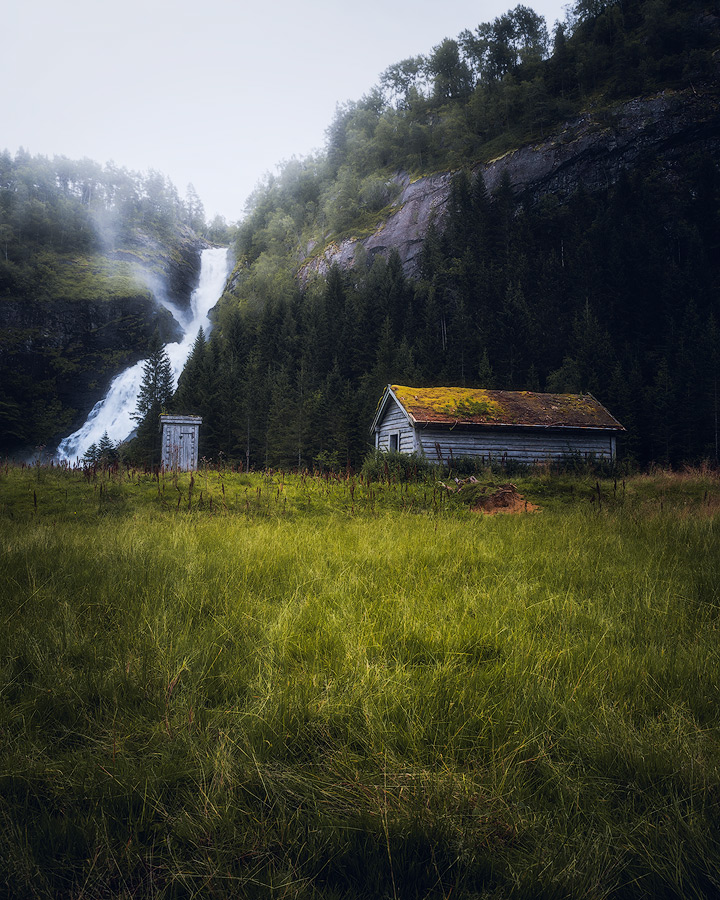
Timing matters more than almost anything else when photographing Norwegian waterfalls. June and July are the peak months — glacier meltwater is at full flow, the light is soft and prolonged, and most mountain roads are open. August is still excellent, though water volumes begin to drop. Spring (April–May) can be spectacular but many falls are inaccessible due to snow. Winter transforms waterfalls into ice climbs — dramatic but a very different shooting experience.
If you're combining waterfall photography with other Norwegian highlights, plan for summer. The midnight sun gives you golden hour that lasts for hours, and the roads to remote falls are clear. Check conditions before you go — some waterfalls, like Mardalsfossen, are only "on" during controlled release periods.
Conclusion
Norwegian waterfalls are among the most photogenic subjects on Earth. From the thunderous free-fall of Vøringsfossen to the delicate parallel streams of the Seven Sisters, each one offers a unique composition. With the right techniques — a tripod, a slow shutter, and soft light — you can bring home images that capture the power and beauty of Norway's cascades.
And if you'd rather enjoy these spectacular scenes from your living room, explore our full collection of Norway landscape prints, including Norwegian fjord prints and canvas prints. Free shipping across Europe on all orders.
