
Norwegian Waterfalls Guide: The Most Beautiful Falls and How to Photograph Them
Norway is a land of dramatic water, where countless waterfalls cascade down mountainsides, creating some of the world's most breathtaking natural spectacles. From the thundering power of Vøringsfossen to the delicate, multi-tiered beauty of Kjosfossen, Norwegian waterfalls offer endless inspiration for photographers and nature lovers alike. Whether you're planning a photography expedition or simply seeking the most stunning waterfalls to visit, this guide will take you through Norway's greatest cascades—and help you capture them perfectly.
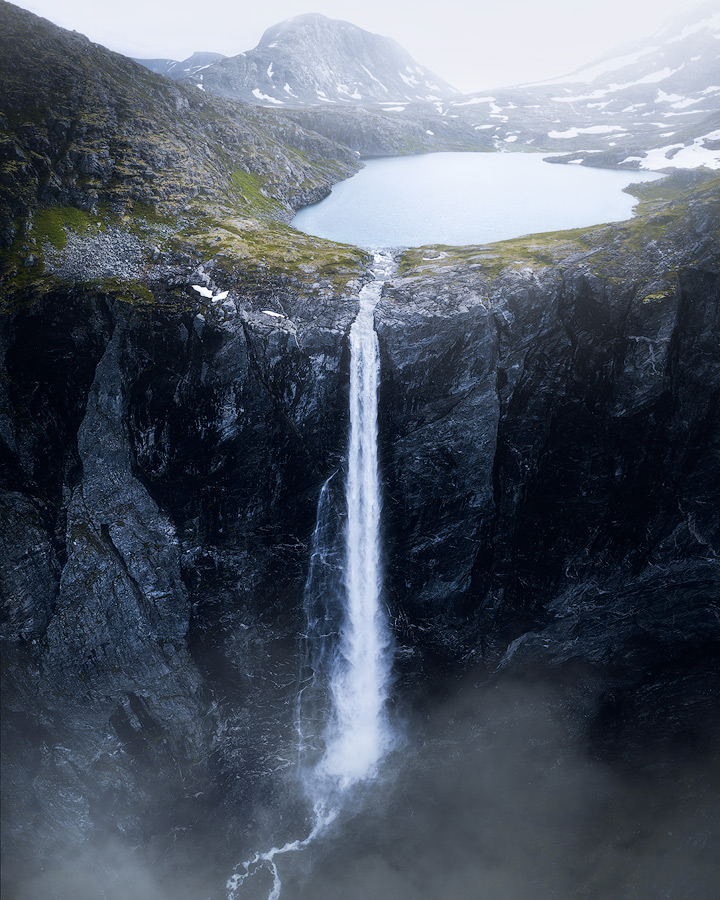
Vøringsfossen: Norway's Most Iconic Waterfall
Standing at 182 meters (597 feet), Vøringsfossen is one of Europe's most powerful waterfalls and arguably Norway's most spectacular. Located in Hordaland county in western Norway, this magnificent cascade plunges into a deep canyon surrounded by steep cliffs and verdant forest. The waterfall is best viewed from two perspectives: the dramatic overlook at the edge of the canyon rim, or from the base of the falls via a challenging hiking trail.
For photographers, Vøringsfossen is a dream come true. The sheer power and volume of water creates an incredible mist effect, especially during spring snowmelt. Use a long exposure (2-4 seconds) to capture the silky, flowing water effect. The best light arrives in late morning or early afternoon when the sun illuminates the mist. Bring a sturdy tripod and neutral density filter—the brightness of the water and sky can be tricky to balance. Many visitors pair a visit to Vøringsfossen with our Norwegian fjord prints to bring that dramatic western Norway scenery home.
Kjosfossen: The Red-Lit Wonder of Flåm
If you're traveling the famous Flåm Railway (Flåmsbana), you'll encounter Kjosfossen, a stunning 225-meter waterfall that seems to drop straight from the clouds. What makes Kjosfossen truly unique is the red-lit Flåm Railway station building at its base—a striking architectural contrast that creates one of Norway's most photographed scenes. The waterfall is fed by snowmelt from the mountains above, making it most powerful in spring and early summer.
The railway stops briefly at Kjosfossen, giving passengers perfect photo opportunities. If you're driving, there's a parking area and short walk that brings you level with the waterfall's middle section. The best photos capture the interplay between the natural cascade and the red building. Shoot in the early morning for softer light, or on overcast days to avoid harsh shadows. Print your Kjosfossen photos on aluminum prints for that modern, striking look.
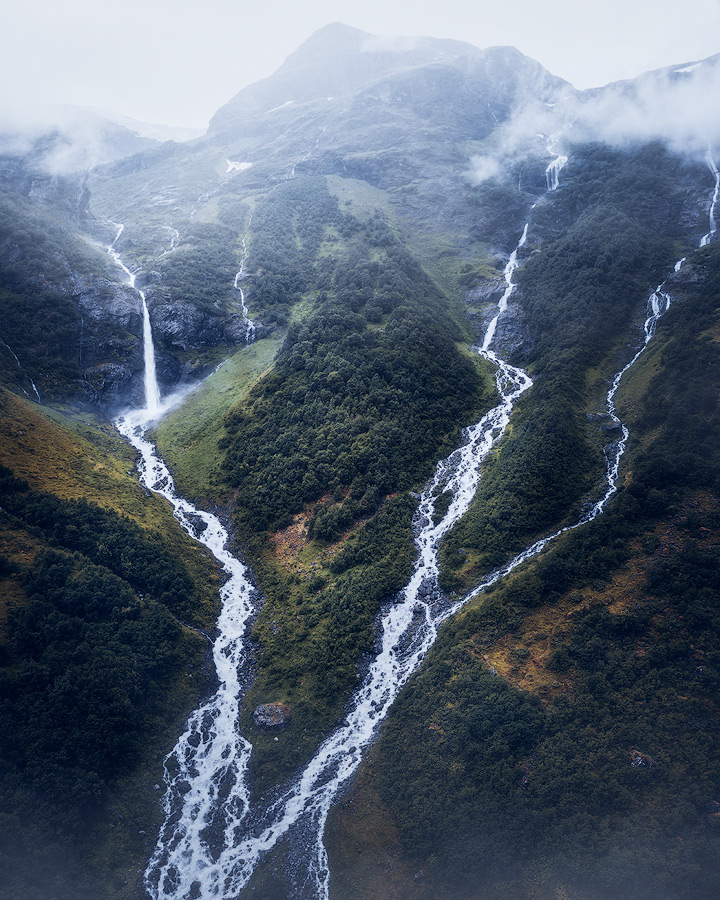
Steinsdalsfossen: Walk Behind the Curtain of Water
Steinsdalsfossen, a 50-meter waterfall in Hordaland, offers a unique experience you won't find at most waterfalls: you can walk behind the cascade itself. The waterfall drops in a narrow curtain, and a well-maintained path leads right to a viewing platform directly behind the falling water. It's an unforgettable perspective that transforms how you experience the power and sound of the waterfall.
Photographers love Steinsdalsfossen because it allows for genuinely different angles. Shoot from behind the waterfall to capture the light filtering through the cascade, or from the front to show the sheer drop and surrounding forest. The spray can be intense, so protect your camera with a rain cover. Visit on an overcast day for even, diffused light that shows off the water's texture beautifully. These intimate, detailed shots look stunning on canvas prints where the fine details come through.
Mardalsfossen: Norway's Tallest Single-Drop Waterfall
At 655 meters, Mardalsfossen is the tallest single-drop waterfall in the world—yes, taller than Yosemite's Bridalveil Fall. Located in Einsundag valley in western Norway, this astonishing waterfall is fed by the Mardalsvann lake and only flows in spring and early summer during peak snowmelt. The waterfall becomes less impressive as water levels drop in July and August, so plan your visit for May or June for maximum impact.
Mardalsfossen requires a hike to reach, but the effort is worth it. The best viewpoint is from a distance that captures the waterfall's full height against the mountain backdrop. A wide-angle lens (14-24mm) works well here to show the scale and drama. The waterfall's seasonal nature makes it a special pilgrimage for waterfall chasers. Celebrate your journey with Lofoten wall art or other Norwegian landscape pieces to remind you of the country's incredible natural wonders.
Seljalandsfossen and Gljúfrabui: Iceland's Neighbors
While technically in Iceland, Seljalandsfossen and its neighbor Gljúfrabui are often included in extended Scandinavia photography tours and are worth mentioning. Norwegian travelers heading to Iceland will find these waterfalls share the same dramatic geological character as Norwegian falls. If you're doing a Scandinavia-wide photography tour, these should be on your itinerary alongside Northern Lights prints and other Nordic landscape art.
Photography Tips for Norwegian Waterfalls
Photographing waterfalls successfully requires understanding a few key principles. First, always use a tripod—the long exposures needed to capture silky water movement cannot be handheld. Second, invest in neutral density (ND) filters to extend your shutter speed even in bright daylight. A circular polarizer reduces glare from mist and spray.
Visit in spring (May-June) for maximum water volume from snowmelt. Early morning light is softer and reveals more detail in the mist. Always scout your location before the light you want—some angles work better with backlight, while others need front light. And most importantly, protect your gear from the intense spray. Many waterfalls generate such forceful mist that camera damage is a real risk.
Once you've captured your favorite shots, immortalize them by ordering Norway landscape prints of your photographs—or our professionally shot waterfall images. Each piece captures the power and beauty of these natural wonders in stunning detail.
Best Time to Visit Norway's Waterfalls
Spring (May-June) offers the most dramatic waterfalls due to snowmelt, though the weather is unpredictable. Summer (July-August) provides stable weather and longer days but lower water levels. Autumn (September-October) offers the best light and fewer crowds, though water volumes decrease. Winter is possible but challenging due to ice and snow conditions.
Plan your waterfall expedition for late May through early June for the ultimate combination of powerful water, manageable weather, and longer daylight hours. Whatever season you visit, bring quality rain gear and expect to get wet—it's part of the Norwegian waterfall experience.
Conclusion: Bring Norwegian Waterfalls Into Your Home
Norwegian waterfalls represent the raw, untamed power of nature—cascades that have inspired artists, photographers, and travelers for centuries. Whether you visit Vøringsfossen, Kjosfossen, or the hidden gems in between, these waterfalls will transform how you see landscape photography. And when you return home, preserve those memories with professional Norwegian fjord prints and waterfall art that brings the drama and beauty of Norway directly into your living space. Every wall deserves a view—make it a Norwegian one.
