
Norway is a photographer's paradise, but it's also one of the most demanding environments you can shoot in. Between freezing arctic winds, salt-sprayed coastlines, glacier crossings, and the peculiar light of the midnight sun, your gear needs to handle extremes while staying light enough to carry up a mountain. Whether you're chasing Northern Lights prints in Tromsø or framing the sheer cliffs of Lysefjord, the right equipment makes the difference between a great shot and a missed opportunity.

This guide covers everything you need to pack for a Norway photography trip — from camera bodies and lenses to the accessories that will save you when the weather turns. We've organised it by what matters most, with practical advice based on real experience shooting in Norwegian conditions.
Camera Body: Full Frame vs Crop Sensor
For Norway's landscapes, a full-frame sensor is ideal. The dynamic range you get from cameras like the Sony A7 IV, Canon EOS R6, or Nikon Z6 II is crucial when you're shooting scenes with bright snow and dark shadows — a common scenario in Norwegian mountains. Full-frame also gives you better low-light performance, which is essential for aurora photography and those long summer twilight hours.
That said, a crop-sensor camera like the Fujifilm X-T5 or Sony a6700 is perfectly capable, especially if weight is a concern. The extra reach from the crop factor can even be an advantage for wildlife shots. The most important thing is to know your camera inside out before you arrive — Norway's weather waits for no one, and fumbling with settings while a squall rolls in is not the time to learn your menu system.
Lenses: The Holy Trinity for Norwegian Landscapes
If you had to pick just one lens for Norway, it would be a wide-angle zoom — something in the 16–35mm range. The grand scale of Norwegian fjords, mountains, and glaciers demands a wide field of view, and this focal length lets you capture dramatic foregrounds with imposing peaks behind. For crop-sensor shooters, a 10–18mm or 10–24mm equivalent does the same job.
The second essential is a standard zoom (24–70mm or 24–105mm). This is your workhorse for valley scenes, village architecture, and tighter landscape compositions. It's also the lens you'll use most for detail shots — mossy rocks, cascading water, and the texture of birch bark in golden light.
Finally, a telephoto zoom (70–200mm or 100–400mm) is invaluable for compressing layers of mountain ridges, photographing wildlife at a distance, and isolating details in vast landscapes. The telephoto compression effect — where distant peaks appear stacked and layered — is one of the most powerful techniques for capturing the feel of Norwegian fjord prints and mountain scenes.
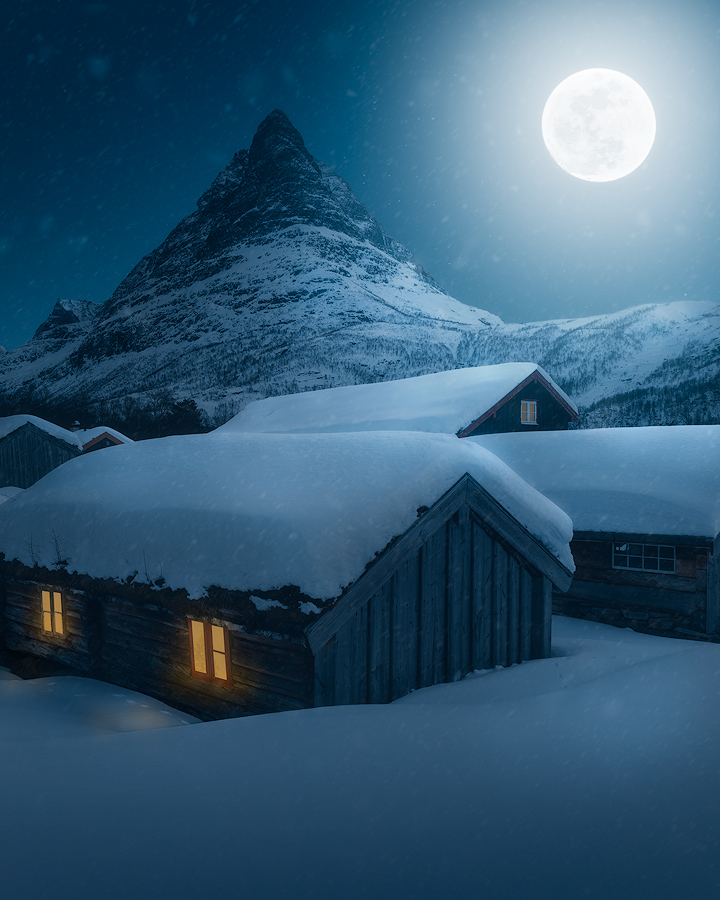
Tripod: Non-Negotiable for Aurora and Long Exposures
A sturdy tripod is absolutely essential in Norway. If you're shooting the northern lights, you'll be doing long exposures of 10–30 seconds in freezing conditions — there is no handheld alternative. The same goes for smoothing water in fjords and rivers, and for the low-light golden hours of winter when the sun barely rises above the horizon.
Carbon fibre tripods are the best choice: they're light, vibration-dampening, and don't conduct cold to your hands the way aluminium does. Look for one that can handle at least 8 kg of load and extends to your full eye level without a centre column — the column is a stability liability in wind. A ball head with a separate panning knob is ideal for panoramas, which you'll want to shoot frequently in Norway's wide-open landscapes.
One critical tip: bring a tripod with spiked feet, or buy rubber foot covers. Many Norwegian trails are rocky, icy, or muddy, and spiked feet grip where rubber slides. Your tripod is also useful as a makeshift walking pole on uneven terrain — another reason to invest in a durable one.
Aurora Photography Essentials
Photographing the northern lights requires specific gear beyond your camera and tripod. A fast wide-angle lens — f/2.8 or faster, 14–24mm — is the heart of your aurora kit. The wider aperture lets you keep ISO manageable (3200–6400 instead of 12,800+) and shutter speeds short enough to capture the structure of the aurora rather than a green smear.
You'll also need spare batteries — cold drains them fast. Keep spares in inner pockets close to your body warmth. A remote shutter release or intervalometer is useful for hands-free long exposures, though a 2-second self-timer works in a pinch. And don't forget a headlamp with a red light mode, which preserves your night vision while you set up shots under the aurora oval.
For the best aurora images, manual focus is key. Set your lens to infinity before it gets dark, using a distant light or bright star to confirm sharpness, then tape the focus ring or switch to manual. Autofocus hunts desperately in the dark, and you don't want to be fighting it while the sky is dancing.
Weather Protection and Accessories
Norway's weather is notoriously changeable — you can experience four seasons in a single hike. A rain cover for your camera is essential, and a simple microfibre lens cloth is worth its weight in gold. Carry at least three; they get wet, dirty, and lost. A polarising filter is invaluable for managing glare from fjords, glaciers, and wet rocks, and a neutral density filter (6-stop or 10-stop) opens up long-exposure possibilities even in daylight.
For your own comfort, layer up with merino wool, a windproof shell, and waterproof boots. Goretex gaiters keep snow and gravel out of your boots on mountain trails. If you're shooting in winter, consider lithium batteries — they perform far better in the cold than standard ones. And always, always bring a dry bag for your camera when hiking near water or in rain — Norwegian weather doesn't give warnings.
Packing It All: Weight and Strategy
The temptation is to bring everything, but every gram matters when you're climbing 600 metres of elevation with a full pack. A realistic Norway kit for a multi-day trip: one camera body, two lenses (wide-angle zoom + standard zoom), a tripod, four batteries, filters, and cleaning supplies. Leave the telephoto at home unless you have a specific wildlife or compression shot planned — it's the heaviest item and the least used on a typical landscape trip.
A good camera backpack with a rain cover is essential. Look for one with rear-panel access (more secure and weather-protected) and enough space for water, snacks, and a light shell jacket alongside your gear. The F-Stop Tilopa, Lowe Pro ProTactic, and MindShift Gear series are all popular among Norwegian landscape photographers for their balance of capacity and comfort.
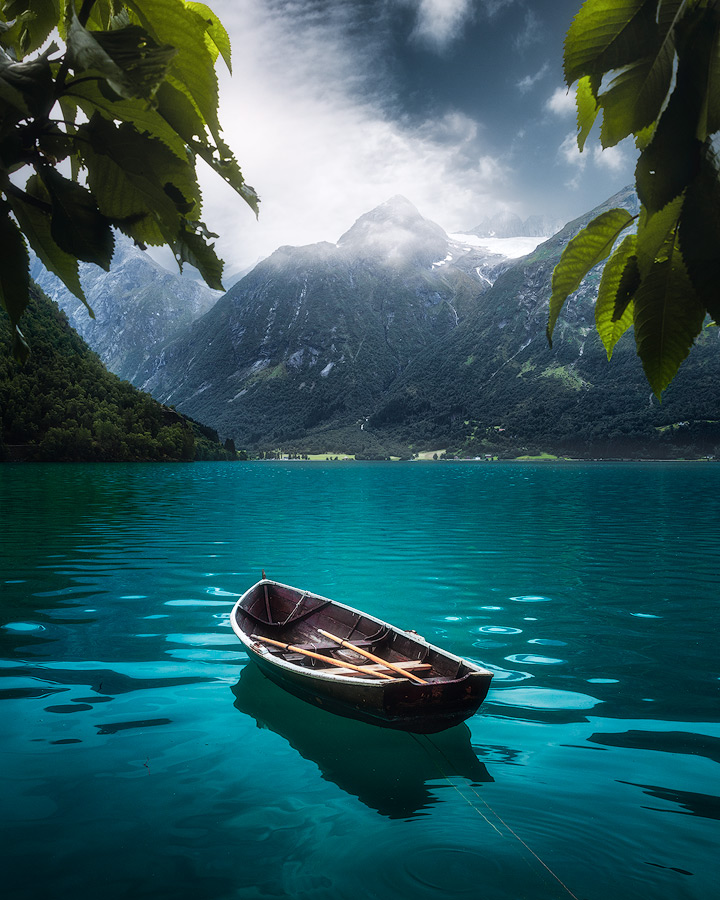
Bringing Your Shots Home
Once you've captured Norway's landscapes, the next step is turning those raw files into beautiful wall art. A high-resolution file from a full-frame camera can produce stunning canvas prints up to 150 cm wide, while aluminum prints offer a sleek, modern alternative that pairs beautifully with Scandinavian interiors.
If you're looking for inspiration for your walls — or you didn't get the shot you wanted — our collection of Lofoten wall art and Norway landscape prints features professionally captured images from across Norway, printed on premium materials and ready to hang. From the midnight sun in Lofoten to the aurora over Tromsø, each piece brings the magic of Norway into your home.
Ready to upgrade your walls? Browse our full range of canvas prints and Norway landscape prints — crafted from high-resolution photography and made to last a lifetime.
