
Few roads in the world stop you dead in your tracks quite like Norway's Atlanterhavsvegen — the Atlantic Ocean Road. Stretching just 8.3 kilometres across a chain of small islands and skerries in Møre og Romsdal county, this UNESCO-listed route has been called "the world's most beautiful road" and "the construction of the century" by Norwegian engineers and travel writers alike. For photographers, it is simply paradise.
Whether you're planning a road trip across western Norway or searching for the perfect piece of Norway landscape prints to bring home a memory of this extraordinary place, the Atlantic Ocean Road deserves a permanent spot on your itinerary.
What Makes the Atlantic Ocean Road So Special?
The road was built between 1983 and 1989, connecting the mainland to the island of Averøya via eight bridges. Its most iconic structure — Storseisundet Bridge — arches dramatically over the open ocean, disappearing into the horizon on misty days. It's the kind of scene that makes you reach for your camera before you've even parked the car.
What sets this location apart from other scenic drives is its raw unpredictability. On calm summer days, the road mirrors itself in glassy Atlantic waters. In autumn and winter, North Atlantic storms send waves crashing metres above the guardrails — a spectacle so visceral it has become one of Norway's most iconic photographic subjects. That duality, serene and savage, is exactly what makes canvas prints from this location so compelling as wall art.
Best Times to Photograph the Atlantic Ocean Road
The short answer: any time. The longer answer depends on the mood you're after.
- Spring (April–May): Longer days, dramatic cloud formations, and relatively mild weather. The light turns golden around 9–10 PM — perfect for long exposures.
- Summer (June–August): The midnight sun lights the road in amber tones through the night. Expect more tourists, but also more photographic opportunities as boats pass through the straits.
- Autumn (September–October): Storm season begins. This is prime time to capture waves crashing over Storseisundet Bridge. Pack waterproof gear — for yourself and your camera.
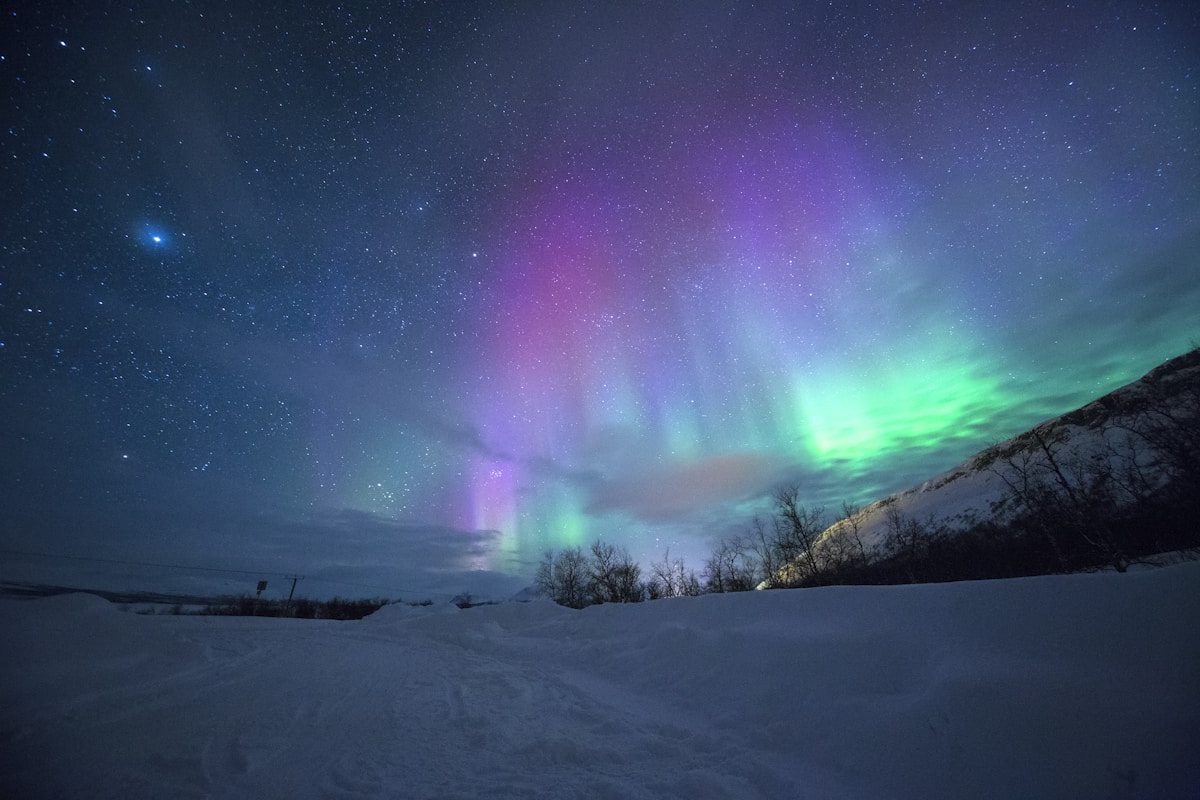
- Winter (November–March): Clear nights offer a chance to combine the dramatic road with the Northern Lights print-worthy skies above Møre og Romsdal. Snow transforms the entire landscape into something almost unreal.
Top Spots to Shoot Along the Route
You don't need to wander far from the main road to find extraordinary compositions. Here are the three unmissable viewpoints:
1. Storseisundet Bridge Viewpoint
The car park on the north side of Storseisundet Bridge is the most photographed spot. From here, you get the classic "road that disappears into the sea" composition. Shoot at dusk for the best balance of sky and road detail. A wide-angle lens (16–24mm full frame) works best here.
2. Eldhusøya Island Rest Stop
This small island has a dedicated rest area with direct views of the bridges and open ocean. On stormy days, the spray reaches the viewing platform. Use a fast shutter speed (1/1000s or higher) to freeze the wave action.
3. Hulvågen Fishing Village
Just off the main road, this tiny fishing hamlet offers a quieter, more intimate take on Norwegian coastal life. Colourful wooden boathouses, old nets drying in the wind, and boats bobbing in the harbour — pure Norwegian nature photography gold.
Practical Photography Tips for the Atlantic Ocean Road
Shooting in coastal Norway comes with unique challenges. Salt spray, high winds, and rapidly changing light require preparation:
- Protect your gear. Bring lens cloths and a rain cover. Salt air can damage equipment quickly — clean your lenses after shooting near the water's edge.
- Use a tripod. Wind can shake even heavy camera bodies. A sturdy carbon-fibre tripod is worth every gram on long-exposure shots.
- Shoot in RAW. The dynamic range between bright sky and dark water is extreme. RAW files give you the latitude to bring out detail in both.
- Check the weather forecast. Apps like YR.no (Norway's national weather service) are more accurate for local conditions than international apps. Storm warnings are your friend — that's when the magic happens.
Bringing the Atlantic Ocean Road Home
Not everyone can make the journey to western Norway — and even if you have, a photograph fades in memory faster than we'd like. That's where wall art comes in. The dramatic blues and greys of the Atlantic, the sweeping arc of Storseisundet Bridge, the raw power of Norwegian coastal weather — these are images that don't just decorate a room. They tell a story.
At NidarosPhoto, our Lofoten wall art and wider Norwegian coastal collection captures exactly this energy. Each print is produced on premium materials — from brushed aluminium to gallery-quality canvas — designed to do justice to the drama of the original scene. Free shipping across Europe means your piece of Norway is never more than a few days away.
Getting There
The Atlantic Ocean Road runs between Kårvåg on Averøya and Vevang on the mainland, roughly 70 km from Kristiansund and about 90 km from Molde. Both towns have airports with connections to Oslo. Hiring a car is by far the best option — the road is most spectacular when you can pull over at will and wait for the light.
If you're combining it with other locations, the Atlantic Ocean Road pairs perfectly with a drive up to the Trollstigen mountain pass (about 90 minutes south) or east to Innerdalen, one of Norway's most spectacular mountain valleys. Together, they form one of the great photography road trips of northern Europe.
Final Thoughts
The Atlantic Ocean Road isn't just a drive. It's a reminder of what Norway does better than almost anywhere else on Earth: putting natural drama on full, unfiltered display. Whether you're standing on the bridge as a storm rolls in from the Atlantic, or browsing Norway landscape prints from the comfort of your living room, the energy of this place is impossible to ignore.
Add it to your list. And if the road comes to you before you can get to it — let it live on your wall.
