
Winter transforms Norway into a photographer's paradise. Snow-draped mountains, frozen fjords, and the ethereal Northern Lights create unforgettable scenes. Whether you're a seasoned professional or an enthusiast with a smartphone, this guide covers everything you need to capture Norway's winter magic.
The Best Time for Winter Photography in Norway
December through February offers the ideal window for winter photography in Norway. During these months, the extended darkness creates perfect conditions for Northern Lights prints viewing and aurora photography. Snow coverage peaks in January and early February, while daylight hours remain limited—typically 4-5 hours in northern regions—creating dramatic lighting for landscape work.

Essential Winter Photography Gear
Cold temperatures demand special considerations. Use a battery grip on your camera to maintain power in subzero conditions. Invest in high-capacity batteries and keep spares in an inside pocket. A sturdy tripod is non-negotiable for long aurora exposures. Remote shutters prevent camera shake and keep your hands warm. Consider canvas prints of your best winter work—they bring the beauty of Arctic landscapes indoors.
Lens selection matters significantly. A wide-angle lens (14-24mm) captures vast snowy vistas, while a 70-200mm telephoto isolates details in frosted peaks. For aurora photography, use your fastest lens (f/1.4 or wider) to gather maximum light during long winter nights.
Capturing Northern Lights: Technical Settings
Aurora photography requires understanding your camera's manual mode. Start with these baseline settings: ISO 1600-3200, aperture f/2.0 or wider, and shutter speed 20-25 seconds. Adjust based on aurora intensity and light pollution. Use manual focus (infinity) and shoot in RAW for maximum post-processing flexibility.
Position yourself away from light pollution. Northern Norway—particularly around Tromsø and Alta—offers optimal viewing. Plan your shoot around new moon phases when skies are darkest. Apps like Aurora Alert notify you of strong auroral activity hours in advance.
Landscape Composition in Winter
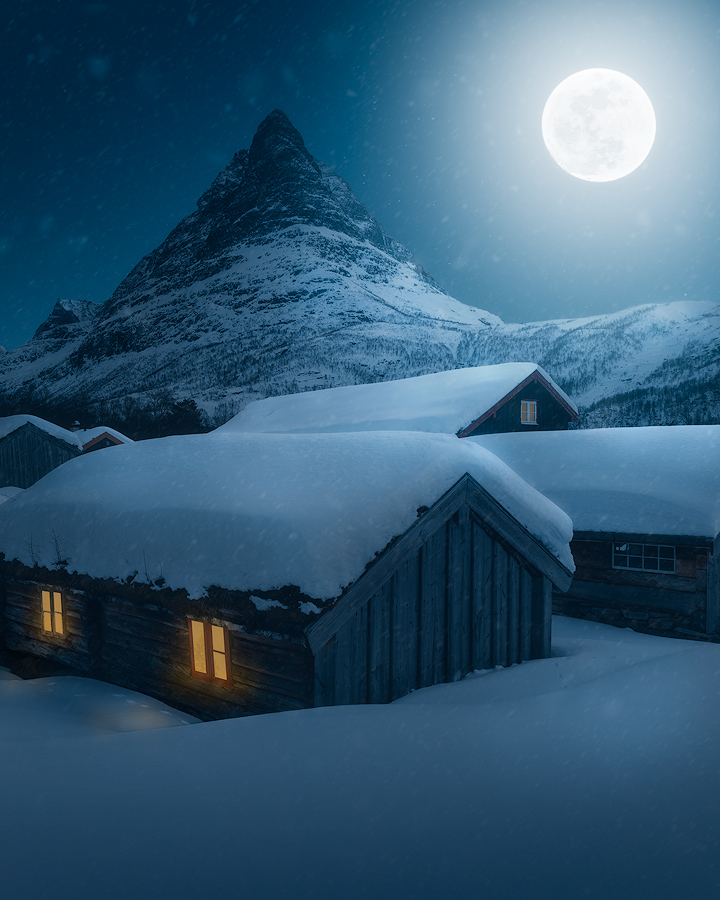
Snow presents unique compositional opportunities. Use white expanses as negative space, drawing viewers' eyes to peaks, trees, or water. Norwegian fjord prints showcase how strong foreground elements—frosted branches, ice formations, snow-laden rocks—anchor winter landscapes.
Contrast is your ally. Dark forests against snow, black rock faces against white blankets, and blue skies above white terrain create visual drama. Underexpose slightly in-camera; snow-filled scenes often trick meters into overexposure.
Protecting Your Gear and Safety
Extreme cold degrades batteries and can fog lenses. Keep camera equipment in an insulated case until ready to shoot. When moving between cold and warm environments, allow 30 minutes for gear to acclimate before opening cases—condensation can damage electronics.
Safety is paramount. Never venture into remote Norwegian wilderness alone in winter. Inform someone of your location and expected return time. Carry emergency supplies: headlamp, extra batteries, warm clothing, and a first aid kit. Consider hiring local guides familiar with avalanche terrain and winter hazards.
Post-Processing Winter Images
Winter photography benefits from thoughtful editing. In Lightroom or Capture One, increase clarity and vibrance to make snow pop without blown highlights. Enhance blues in aurora shots—cool tones complement the Northern Lights aesthetic. Aluminum prints particularly showcase crisp winter details and aurora colors with their reflective surfaces.
Careful with whites: add subtle shadows to snow (using Clarity and Texture sliders) to avoid flat, overexposed appearance. Reduce yellows and increase blues in the blue channel for authentic aurora rendering.
Displaying Your Winter Photography
Once processed, your winter images deserve quality display. Lofoten wall art and other Norway landscape prints let you share the majesty of winter photography year-round. Canvas offers warmth, aluminum provides modern sharpness, and acrylic delivers stunning color saturation—each format suits different winter subjects.
Conclusion: The Rewards of Winter Photography
Winter photography in Norway demands patience, preparation, and respect for nature's power. The rewards are immeasurable: images of stark beauty, ethereal auroras, and landscapes transformed by snow. Whether your goal is Instagram-worthy shots or gallery-exhibition prints, winter Norway delivers unparalleled subject matter. Pack your gear, respect the elements, and capture magic during the Arctic's most photogenic season.
